Dive & Explore
… in the waters of La Croix-Valmer & the bay of Cavalaire
Petit sec
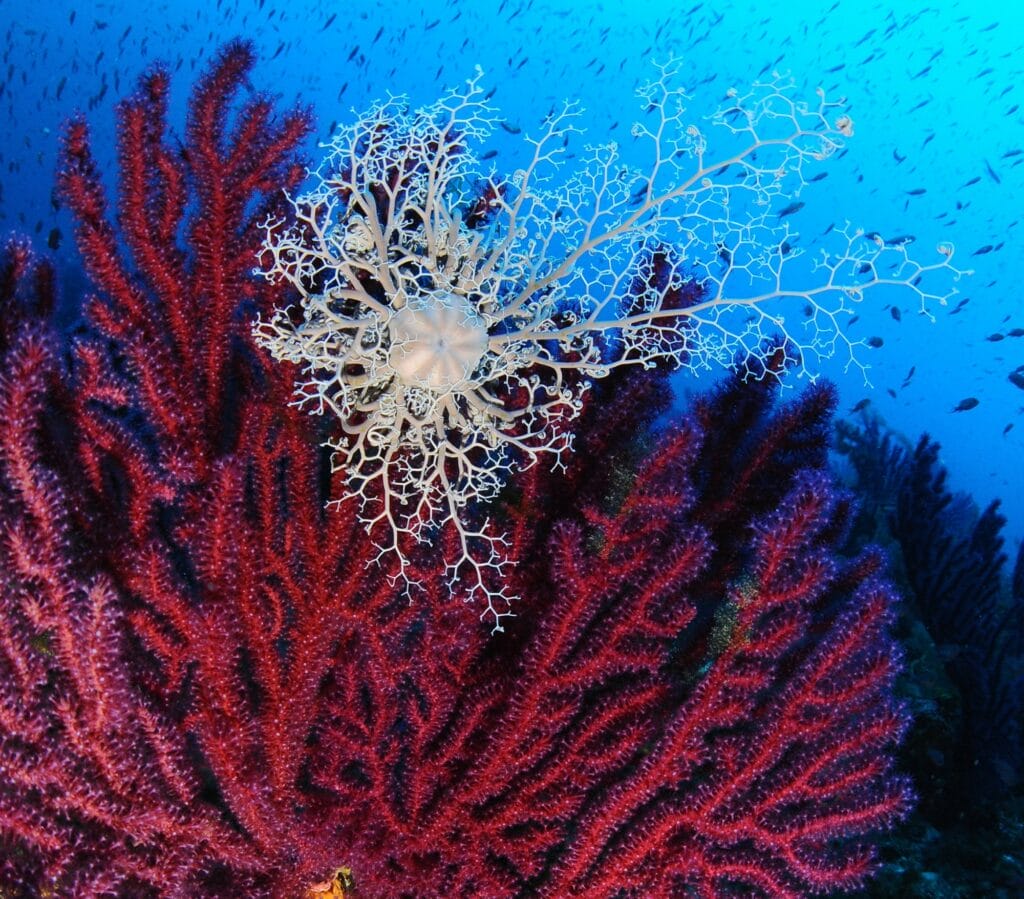
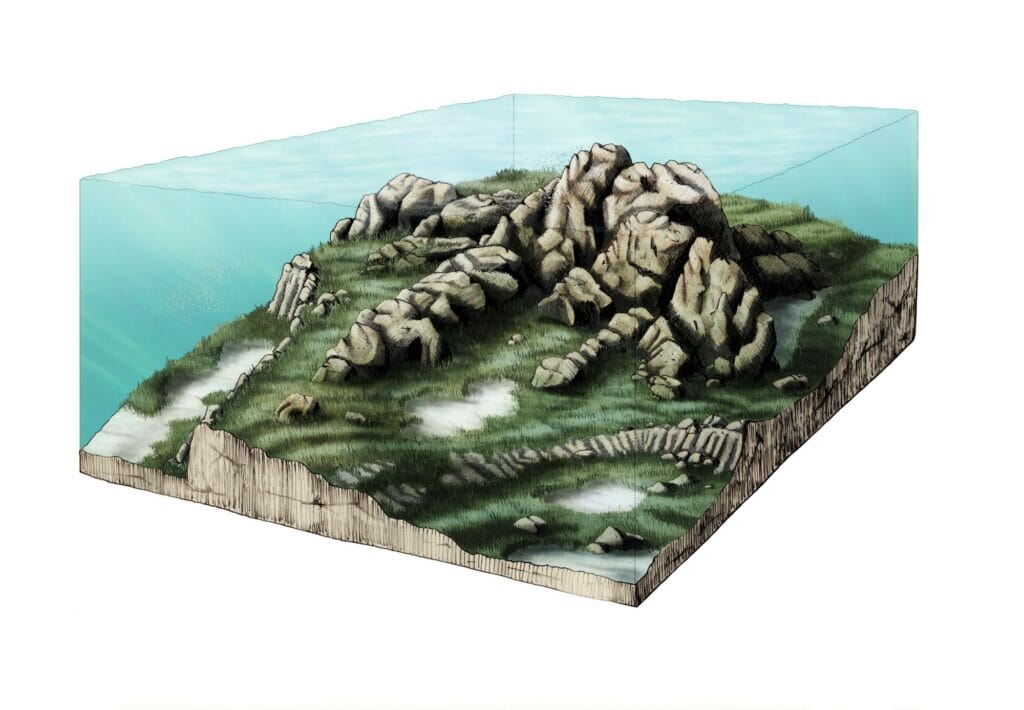
The “Petit Sec” dive site is located off the tip of Cap Lardier. It consists of a rock formation that rises close to the water’s surface and extends down to a depth of around twenty meters. Divers particularly appreciate this spot for its marine life; indeed, it is home to a wide variety of fish year-round (such as rainbow wrasse, groupers, and moray eels).
Togo
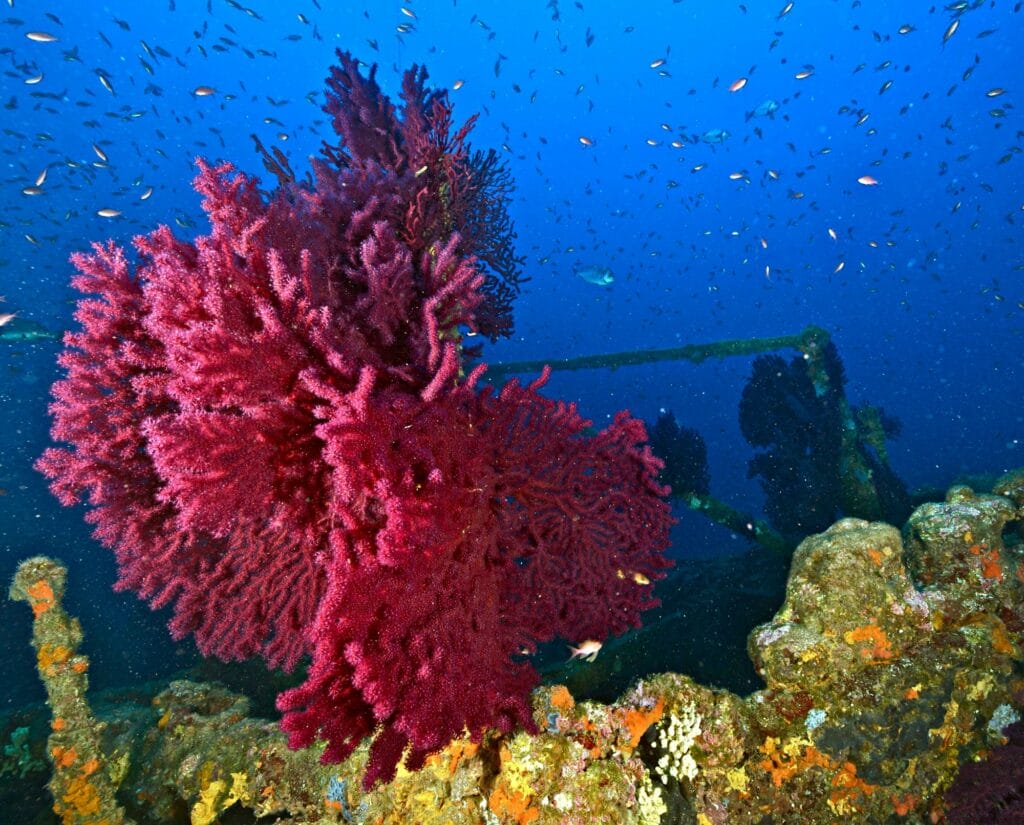
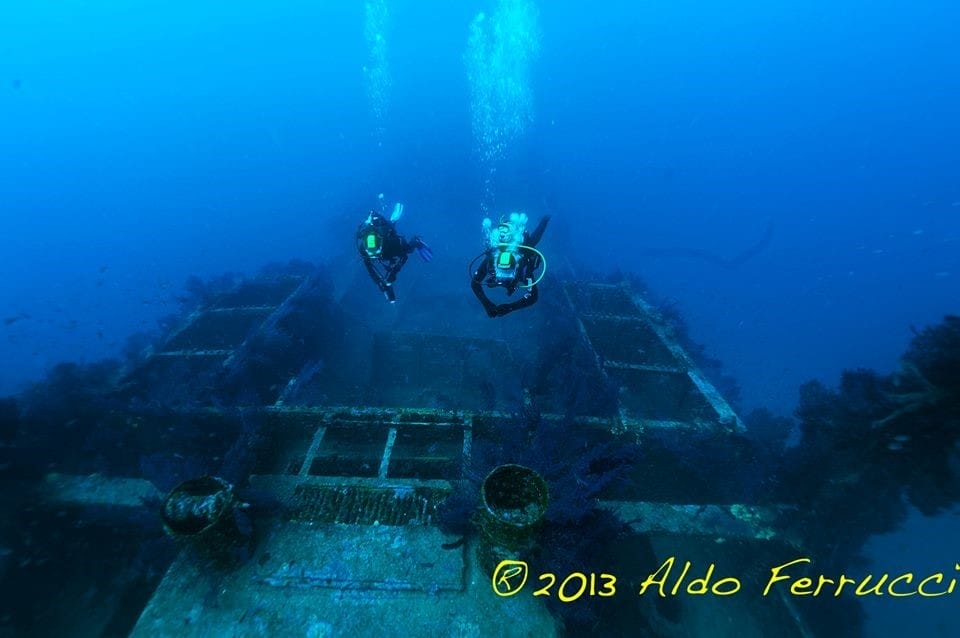
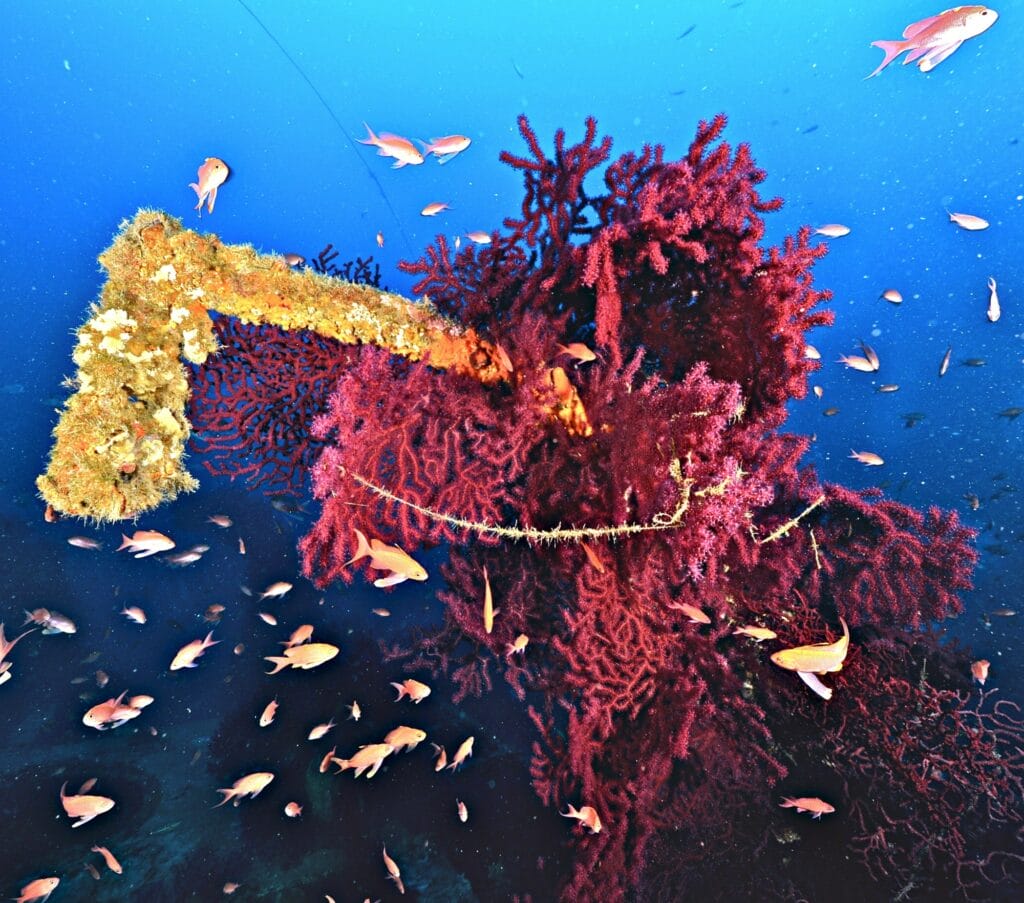
The *Togo* is one of the finest shipwrecks in the Mediterranean. It was a sail-and-steam cargo ship (featuring three masts and a 208-hp engine) measuring 76 meters in length, built in 1882 in Newcastle, England, for the Compagnie Havraise Péninsulaire. The company originally named it the *Ville de Valence*. In 1906, the vessel was sold to the Becchi Lalagno company of Savona, where it sailed under the name *Amor*. In 1912, it was acquired by the Ilva company to transport coal across the Mediterranean; it was this company that renamed it the *Togo*. On May 12, 1918, the *Togo* struck a 150 kg floating mine in the Bay of Cavalaire. The impact caused the ship to split in two immediately, and it sank rapidly. Today, the bow section rests upright on the sandy seabed at a depth of 60 meters. The stern section lies 300 meters away, also resting on the sand, at a depth of 68 meters.
Prophète
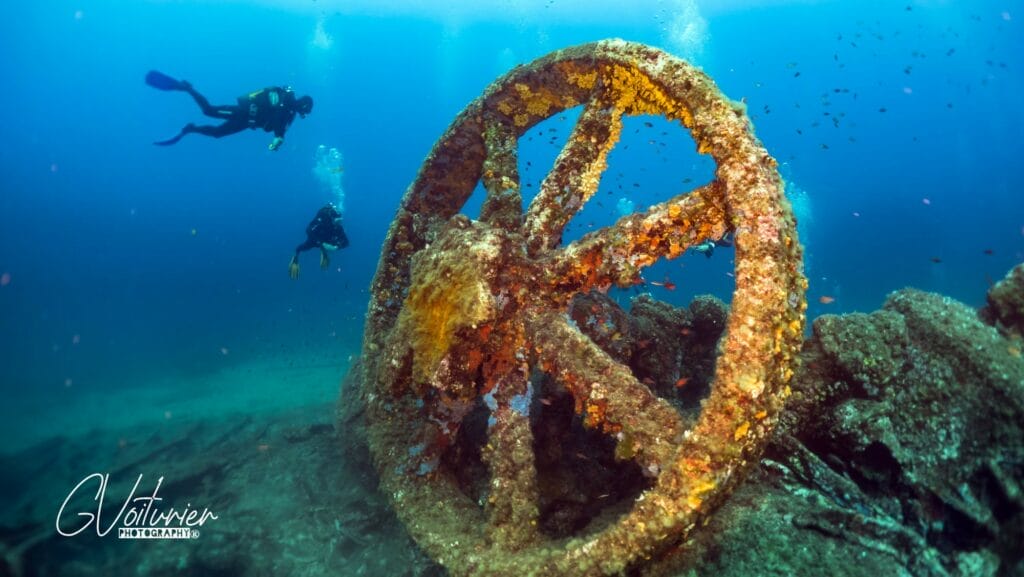
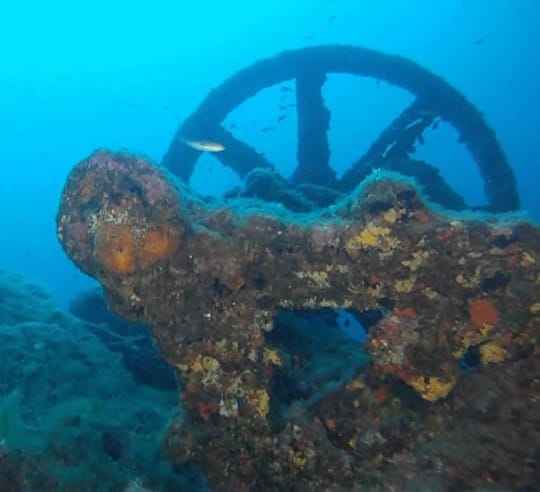
The Prophète was a steam- and propeller-driven vessel. It was used to connect Algeria with Provence. After only three years of service, the *Prophète* was wrecked in 1860 in the Bay of Agay, at the Saint-Raphaël dive site. It was carrying a cargo of wheat. To this day, the wreck of the *Prophète* remains the oldest steamship off the coast of Provence. The remains of the vessel lie scattered over a distance of about fifty meters on the seabed of the Mediterranean.
The anchors are in place, the rudder is there, a propeller is also visible, and so on—all elements that turn your scuba dive in Cavalaire-sur-Mer into a true voyage of discovery. It is accessible to everyone, as conditions generally feature little current and good visibility. However, it is best to visit during fair weather, as the site is highly exposed to the wind and offers no shelter when the sea gets rough.
Moyen sec
The Moyen Sec drop-off is located just a short distance from Cap Lardier. You will easily encounter a variety of typical Mediterranean marine life there, such as sargo and conger eels. In addition to standard diving, you also have the opportunity to try your hand at activities like underwater photography during an exploratory dive. Experienced and trained divers can also come here for freediving.
Espingole
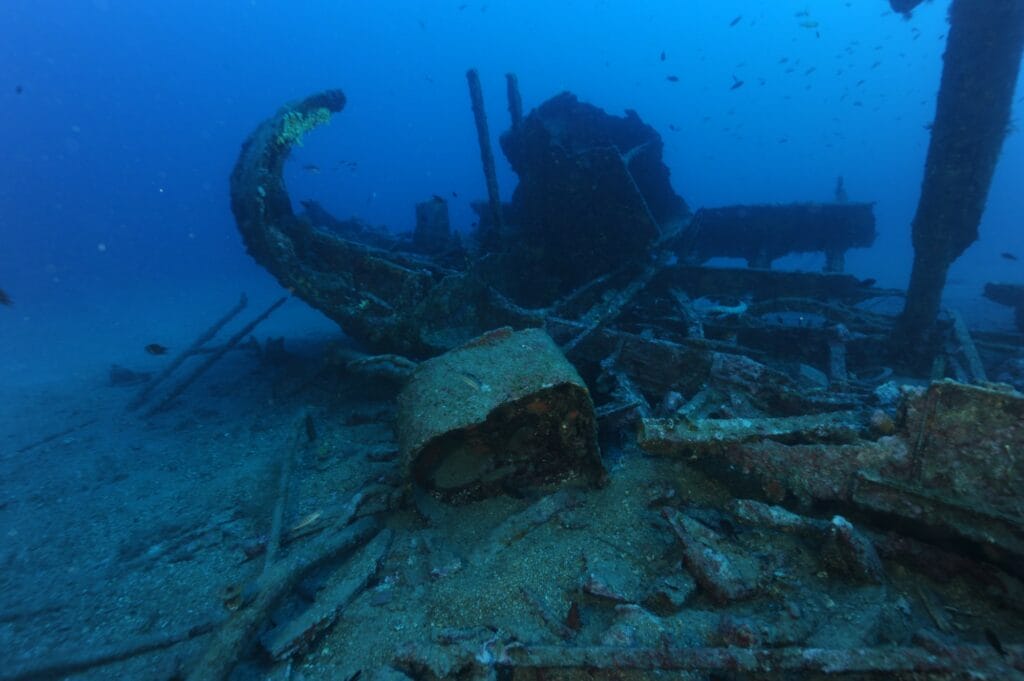
The Espingole was a very long (56 m) and narrow (6 m wide) torpedo-boat destroyer. The warship carried a crew of 62 and was equipped with various weapons (guns and torpedoes). It was in service between 1900 and 1903. The *Espingole* sank on February 4, 1903. Today, the wreck lies near Cap Lardier, 400 meters west of Pointe Andati.
Roches Quairolles
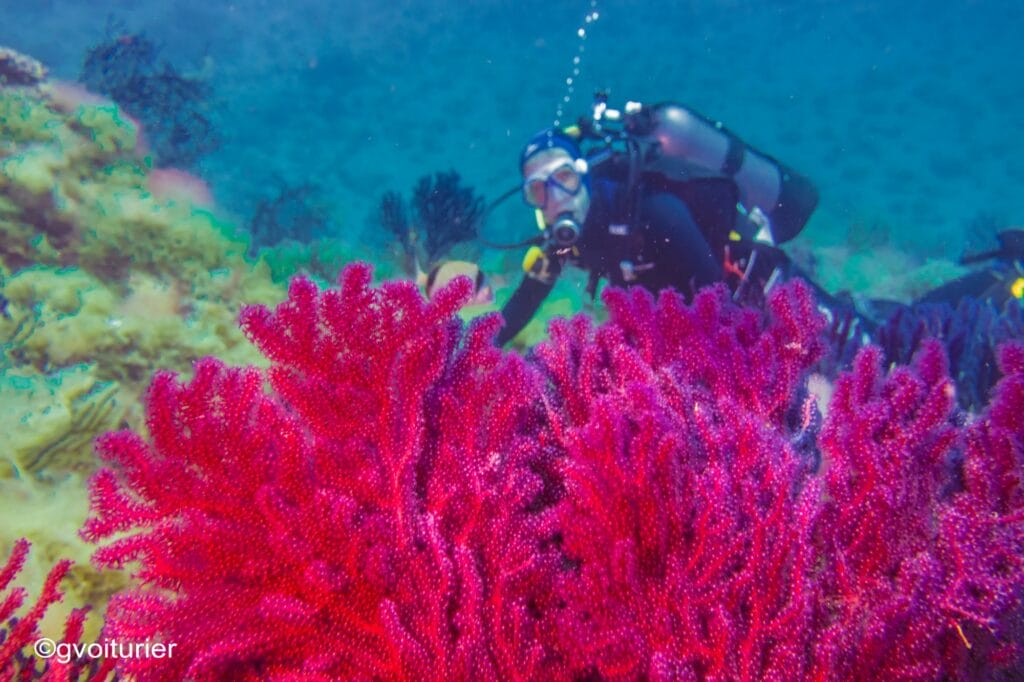
The Quairolles rocks are magnificent rock formations consisting of two main outcrops: the *Petit Quairolle* and the *Grand Quairolle*. They are located in the heart of the “3 Caps” protected area. Underwater photographers will discover a rich and exceptional array of flora and fauna here. In good weather, the eastern face offers sightings of gorgonians in the morning, while the western face allows you to admire stunning overhangs carpeted with yellow encrusting anemones (*Parazoanthus axinellae*). The site also attracts passing marine life such as groupers, conger eels, fan mussels, dentex, moray eels, and brown meagre. Dives take place at depths ranging from 15 to 35 meters.